R290 Refrigerant: What it means for your home
Quick verdict: R290 refrigerant is used in newer heat pumps including the Vaillant aroTHERM pro. It's better for the environment than older refrigerants, but it is flammable, which means there are rules about where the outdoor unit can be placed. Understanding those rules is the difference between a straightforward installation and one that causes problems.
If you've been researching heat pumps recently, you've probably come across the term R290. It gets mentioned a lot, usually followed by either enthusiastic claims about how environmentally friendly it is, or vague warnings about it being flammable. Both things are true. Neither is the full picture.
Here's what R290 actually is, why it matters, and what it means practically for getting a heat pump installed at your home.
What is R290?
R290 is propane. That's it. The same propane used in camping stoves and gas barbecues, just highly purified and used as a refrigerant inside a heat pump.
Refrigerants are the fluids that move heat around inside a heat pump. They work by cycling between liquid and gas states, absorbing heat when they evaporate and releasing it when they condense. The specific refrigerant used affects how efficiently a heat pump can do that job and what happens to the environment if any of it leaks.
Older heat pumps used refrigerants like R410A or R32. These are synthetic chemicals with a high global warming potential. R410A, for example, has a global warming potential roughly 2,000 times higher than CO2. A small leak isn't just a loss of efficiency, it's a meaningful climate impact.
R290 has a global warming potential of just 3. That's as close to zero as you can get with a practical refrigerant. It also performs very well as a heat transfer fluid, which is part of why manufacturers are switching to it.
So what's the catch?
Propane is flammable. That's not a secret, and it's not a reason to avoid R290 heat pumps. But it does mean the installation has to follow specific safety rules.
The main one is the exclusion zone. This is the area around the outdoor unit where you can't have potential ignition sources: no plug sockets, no light switches, no openable windows or doors that could let refrigerant into the building. On a standard R290 installation, that zone extends one metre out from the unit in all directions.
For a lot of UK gardens, that's where the conversation starts getting complicated. Gardens are small. Fences, gates, windows, and back doors are close together. Finding a spot that clears a one-metre exclusion zone on all sides takes some planning.
Does that mean R290 heat pumps are hard to install?
Not necessarily. Most gardens have at least one viable location once you actually measure things out. And the rules exist for good reason: the amount of R290 in a heat pump is small, and the safety clearances are designed to make sure that even in the unlikely event of a leak, there's no risk.
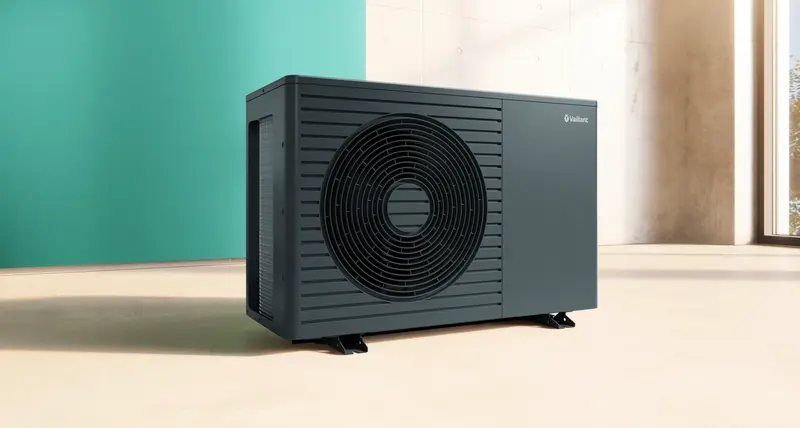
What's changed recently is that some manufacturers have started building features into their units that reduce the exclusion zone requirement. The Vaillant aroTHERM pro is a good example. It has a Flexible Space Function that, when activated, runs the fan at a low speed continuously. That constant airflow disperses any potential leak before it can build up, which allows the exclusion zone to shrink to just the area directly below the unit.
That's a meaningful difference for properties where space is tight. It opens up corners, side returns, and spots close to walls or fences that would be off-limits with a standard installation.
What about inside the home?
The refrigerant circuit in a heat pump is sealed. R290 stays inside the outdoor unit and the pipework connecting it to the indoor components. It doesn't circulate through your radiators or hot water cylinder. The water in your heating system is completely separate.
So the flammability of R290 refrigerant is only relevant to the outdoor unit and the immediate area around it. Once you're past the exclusion zone, it's a non-issue.
Is R290 refrigerant the right choice?
For most new heat pump installations today, yes. The environmental credentials are genuinely strong. The performance is good. The safety rules are manageable and well understood by experienced installers.
The key is working with an installer who knows what they're doing. The exclusion zone rules aren't complicated, but they do need to be followed properly. A Heat Geek installer will assess your outdoor space before anything else and tell you exactly what's possible and where.
If you're curious whether an R290 heat pump like the aroTHERM pro would work for your property, a Heat Geek Design Consultation is the place to start. We'll look at your space, explain your options, and give you a clear answer.
Find out what is possible for your home
Heat Geek designs heat pump systems built around your specific property. Start with a postcode search to see what is available in your area.